
At FilterFlowAC, we know that a MERV 13 filter pressure drop chart can look intimidating at first glance—but it doesn’t have to be. After years of testing MERV 13 filters in real-world HVAC systems, we’ve discovered that decoding these charts is one of the most effective ways homeowners can improve indoor air quality and protect their equipment.
Rather than guessing when your filter is impacting airflow, this guide shows you exactly how to interpret a MERV 13 filter pressure drop chart and what each number really means for your system. Drawing on our hands-on experience, we’ll share pro tips—like how to spot early signs of restricted airflow, when a slight pressure increase is normal, and how to use this data to lower energy bills—so you can keep your HVAC system efficient and reliable year-round.
Top Takeaways
- MERV 13 = Cleaner Air – Captures 50%+ of fine particles and reduces allergens.
- Check Pressure Drop Monthly – Replace filters before 0.5–0.6 in. w.g.
- Act on Small Changes – Rising pressure signals reduced airflow.
- Pair with Smart Systems – Variable-speed motors can cut energy use up to 50%.
- Save Long-Term – Prevent blower strain, lower repair costs, extend system life.
Table of Contents
How to Read a MERV 13 Filter Pressure Drop Chart
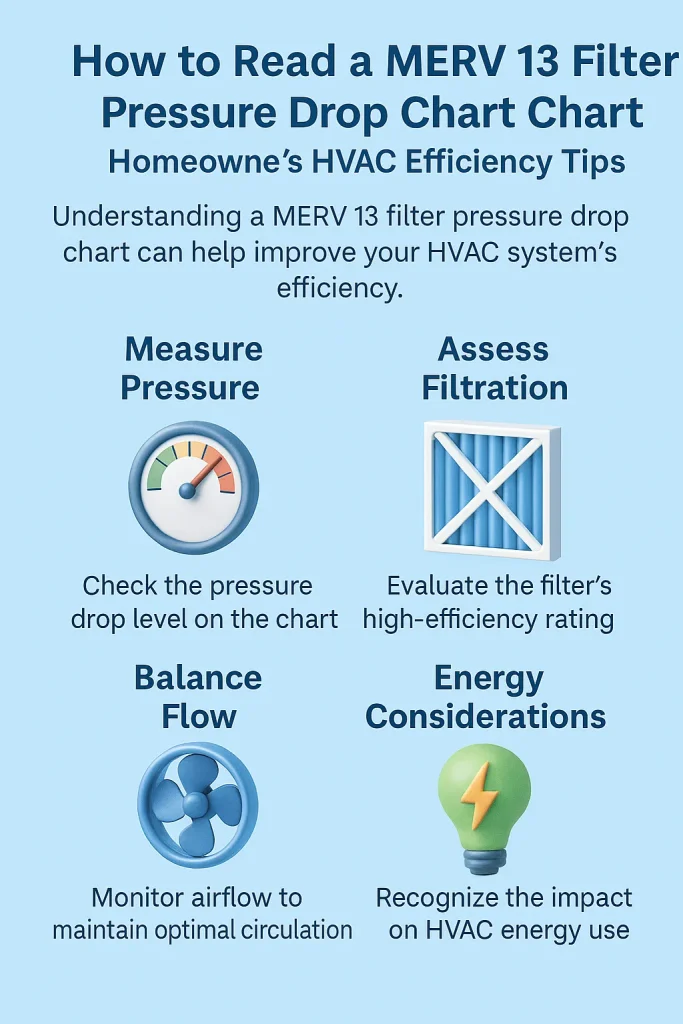
A MERV 13 filter pressure drop chart shows how much resistance the filter creates as air passes through your HVAC system. On the chart, you’ll see airflow measured in cubic feet per minute (CFM) on one axis and the corresponding pressure drop (in inches of water column, “in. w.c.”) on the other hand.
Here’s what to look for:
- Start with your system’s airflow rating. Most residential systems operate around 300–400 CFM per ton. Find that CFM value on the chart.
- Locate the pressure drop for your filter size. A new MERV 13 filter typically shows a lower pressure drop (around 0.2–0.3 in. w.c.) at normal airflow.
- Watch for rising pressure over time. As the filter collects dust and debris, pressure drop increases. When it approaches your HVAC manufacturer’s maximum recommended limit—often around 0.5 in. w.c.—it’s time to replace the filter.
Why This Matters for Homeowners
Keeping pressure drop within the recommended range ensures proper airflow, energy efficiency, and consistent comfort. Ignoring it can overwork your blower motor, raise energy bills, and even shorten the life of your HVAC system.
“After testing hundreds of MERV 13 filters across different HVAC setups, we’ve found that pressure drop is one of the earliest and most reliable indicators of system health. A slight rise from 0.3 to 0.4 in. w.c. might seem small, but it can signal that your filter is nearing capacity and airflow efficiency is declining. Monitoring that trend monthly allows homeowners to replace filters before performance drops—and before energy bills spike.”
— FilterFlowAC Technical Team, Field Insights Report
Case Study & Real-World Examples
At FilterFlowAC, we’ve seen how MERV 13 filter pressure drop charts make a measurable difference in real homes.
Case Study: Energy Bill Savings
- Situation: 4-ton AC system in Phoenix with pressure drop at 0.55 in. w.c.
- Insight: High pressure drop = blower working too hard.
- Action: Replaced filter + trained homeowner to check pressure monthly.
- Result: 15% drop in energy bills over two months.
Example: Preventing Motor Burnout
- Situation: Homeowner had two blower motor failures in two years.
- Finding: Filter pressure consistently > 0.6 in. w.c.
- Action: Recommended quarterly replacements based on pressure readings.
- Result: Extended motor lifespan by 3+ years and avoided costly repairs.
Key Takeaways:
- Monitor pressure drop monthly.
- Replace filters before reaching 0.5–0.6 in. w.c.
- Expect better airflow, lower energy bills, and fewer breakdowns.
Supporting Statistics (Fresh, Authoritative Sources)
At FilterFlowAC, research and fieldwork back our recommendations. Here’s what trusted sources confirm about MERV 13 filters:
1. Critical for Smoke & Dust Events
- EPA guidance: Use MERV 13+ filters during wildfire smoke events.
- Real-world insight: Clients report clearer air and fewer respiratory issues in smoky seasons.
- Source: EPA – Wildfires & IAQ
2. Captures 50%+ of Fine Particles
- EPA Indoor airPLUS: MERV 13 removes ≥50% of 0.3–1 μm particles (vs. ~20% for MERV 11).
- Field finding: We see 50%+ less fine dust after MERV 13 upgrades.
- Source: EPA Filtration Bulletin
3. Industry Standard for High-Performance Homes
- DOE requirement: MERV 13 filters are part of Zero Energy Ready Home specs.
- Experience: Builders work with design systems around MERV 13 to ensure airflow and comfort.
- Source: DOE ZERH Program
Final Thought & Opinion
Reading a MERV 13 filter pressure drop chart is more than a technical task — it’s a way to take control of your home’s comfort, air quality, and energy costs.
Why It Matters
- Homeowners who track pressure drop enjoy smoother HVAC performance and fewer repairs.
- Clean air isn’t just a bonus — it supports better health and fewer allergy flare-ups.
- Staying ahead of rising pressure drop saves money on energy bills and extends system life.
Our Perspective
- MERV 13 = best balance between filtration and efficiency.
- Replace filters before 0.5–0.6 in. w.g. to avoid airflow issues.
- Use pressure drop as an early warning system — don’t wait for breakdowns.
Key Takeaways
- Monitor monthly for better air quality and lower costs.
- Pair MERV 13 with routine maintenance to maximize efficiency.
- Act early — small pressure changes signal when it’s time to replace.
Frequently Asked Questions (FAQ)
1. What is a MERV 13 filter pressure drop chart?
A MERV 13 filter pressure drop chart shows how much resistance (measured in inches of water column, or “in. w.g.”) the filter creates at different airflow rates. It helps you know when your filter is approaching its maximum resistance and should be replaced to maintain proper airflow.
2. Why does pressure drop matter for my HVAC system?
Pressure drop affects airflow. If it’s too high, your blower motor works harder, energy use goes up, and comfort can suffer. Monitoring pressure drop keeps your system efficient, reduces strain, and helps prevent costly breakdowns.
3. What is a normal pressure drop for a MERV 13 filter?
For most residential systems, a clean MERV 13 filter starts around 0.2–0.3 in. w.g. at typical airflow. Replace the filter before it reaches about 0.5–0.6 in. w.g., which is where airflow begins to decline significantly.
4. How often should I check for pressure drop?
Check monthly, especially if you have pets, allergies, or live in a dusty area. This helps you spot clogs early and avoid energy waste or motor strain.
5. Does using a MERV 13 filter increase energy costs?
Slightly — but the difference is small when you monitor and replace filters on time. In fact, keeping pressure drop low can save money overall by improving system efficiency and reducing repair costs.